The Cost of “Chasing Shiny”: Why 30-Year SoftwareDurability Outperforms Trend-Driven Development
The modern software landscape is suffering from collective exhaustion.
Every morning, engineering teams wake up to a new “industry-standard” framework, a revolutionary state-management library, or an abstract architectural paradigm that promises to solve all their deployment woes. This phenomenon is known as Hype-Driven Development (HDD). It has turned software engineering into a treadmill of continuous rewrites. Startups and mid-market companies frequently rebuild their front-ends or migrate their database layers every 24 to 36 months, simply because their existing stack has gone out of fashion or reached its vendor-enforced end-of-life.
While this fast-paced volatility is tolerated in consumer-facing apps, it introduces a severe risk profile for long-term digital transformation initiatives. True software excellence is not measured by how new a framework is. It is measured by its operational lifespan, security stability, and return on investment (ROI) over decades. In a highly volatile market, choosing 30-year software durability over trend-driven development isn’t just an engineering preference; it is a critical business strategy.
The 24-Month Deprecation Cycle vs. Deep Engineering Truths
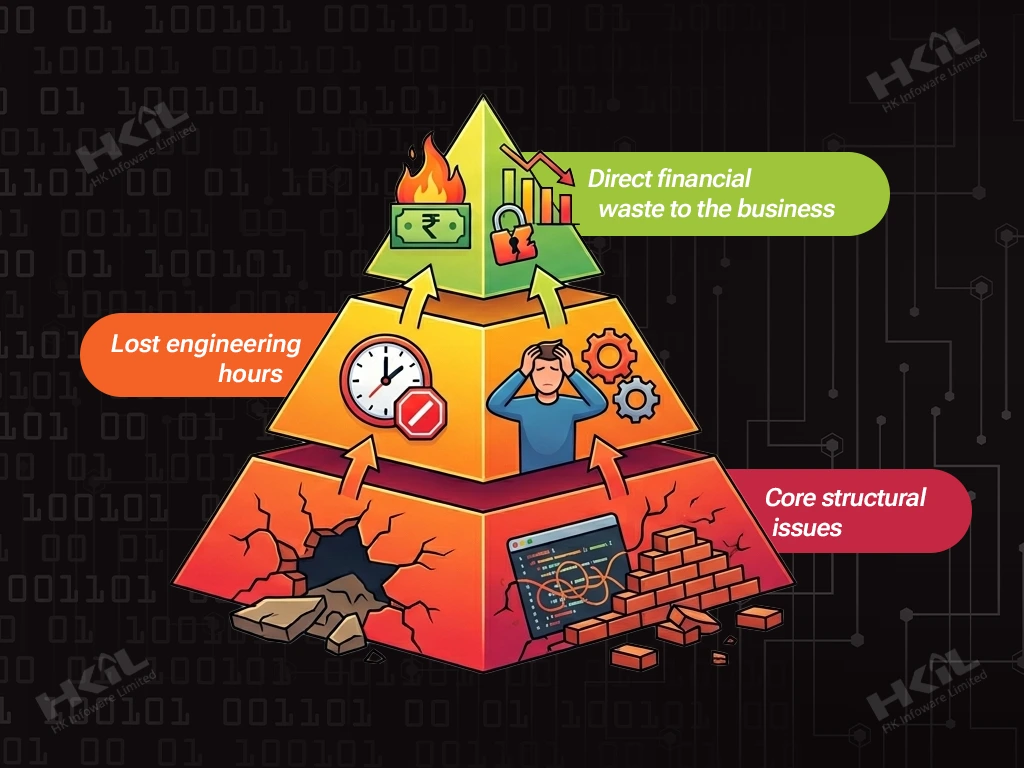
Modern open-source and venture-backed developer ecosystems prioritize marketing, hyper-growth, and rapid breaking changes over backward compatibility. A large-scale empirical study on software evolution published by the National Institutes of Health (NIH) analyzed 3.3 billion source code elements and discovered that the median lifespan of an individual line of code is just 2.4 years. When an underlying framework deprecates at this speed, it creates an invisible tax on your business.
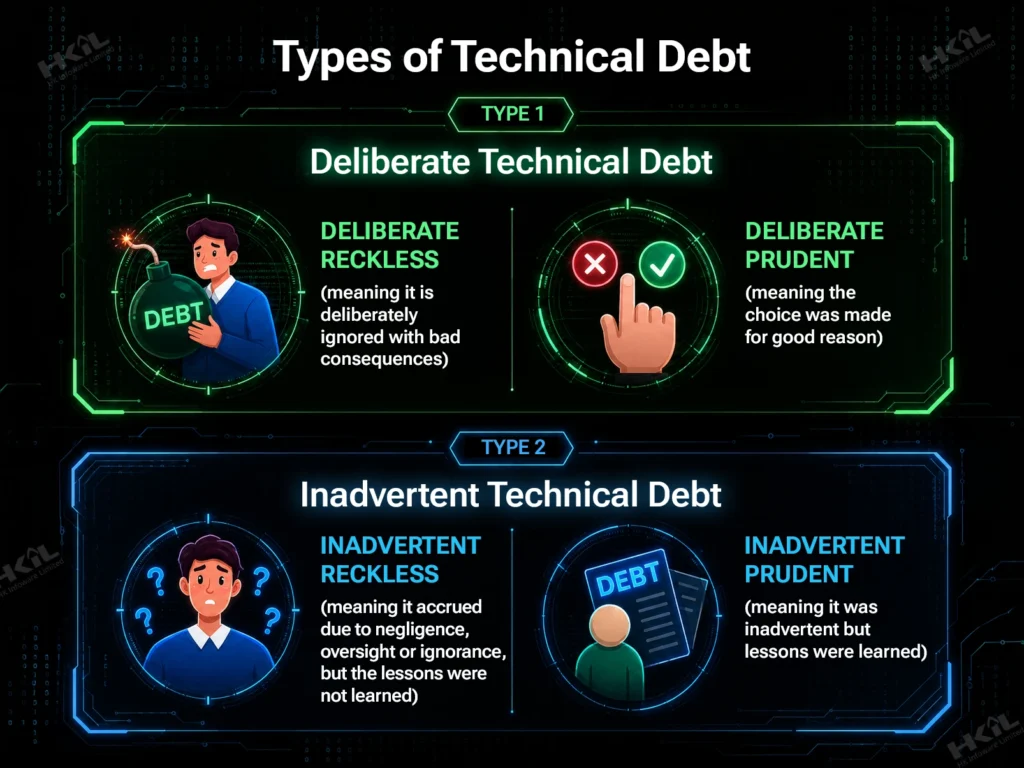
Your engineering hours are burned on compounding technical debt software issues like updating dependencies, refactoring syntax, and fixing broken APIs, instead of delivering actual feature value to your customers. On average, a software team works about 26% of its code prior to release. Research from Code Climate demonstrates that these wasted hours can cost a medium-sized business upwards of $4.7 million a year in lost productivity.
To build true enterprise saas solutions, you must return to deep engineering truths that do not change over decades:
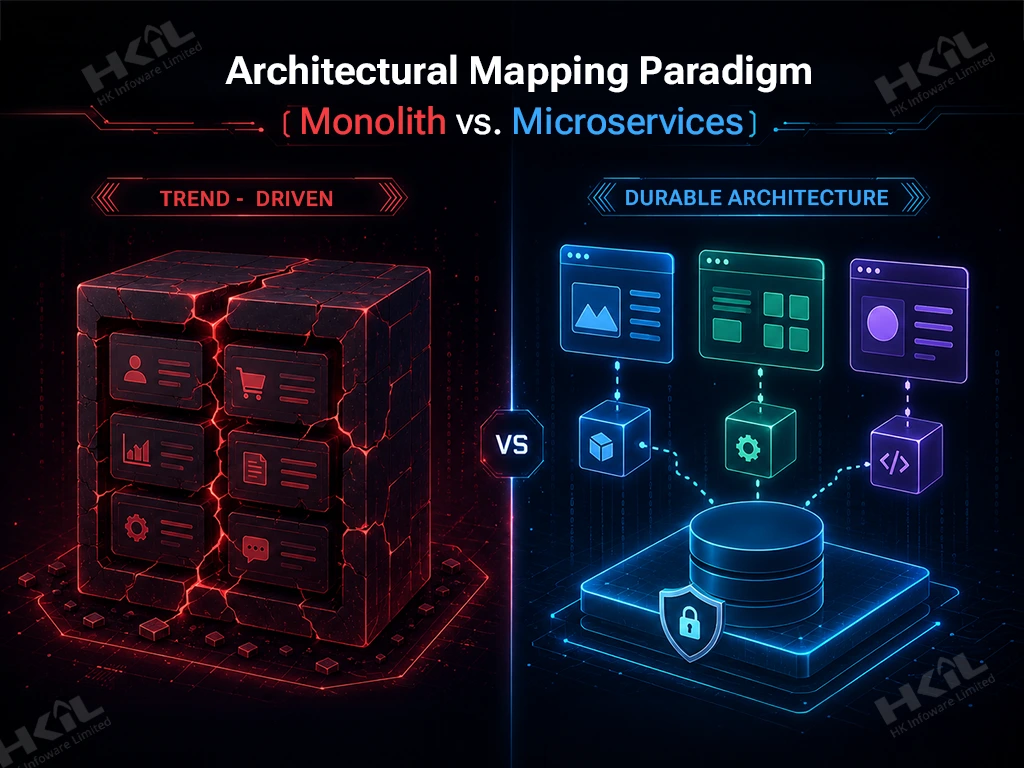
- Predictable I/O: Designing software around fundamental inputs, outputs, and clear business logic outlasts trendy architectural patterns. Over-engineering a system with complex microservices when a monolithic structure is more reliable is a hallmark of trend-chasing.
- Relational Data Integrity: A properly normalized SQL database schema designed in the 1990s remains fundamentally secure, highly performant, and completely functional today. Data outlives code.
- Low-Abstraction Code: Writing clean, core code with minimal external abstractions outlasts heavy reliance on volatile third-party libraries. Every external dependency is a future liability and a potential supply-chain vulnerability.
Why Enterprise SaaS Solutions Demand Strategic Precision
For an enterprise buyer, whether it is a university managing academic compliance or a hotel chain handling real-time room inventories, software isn’t a playground for testing trends. It is critical infrastructure.
According to data from Deloitte’s Global Technology Leadership Study, accumulated technical debt now accounts for 21% to 40% of an organization’s total IT spending. Furthermore, a landmark study by the Consortium for Information & Software Quality (CISQ) estimated that the cost of poor software quality and legacy technical debt in the United States alone has skyrocketed to $2.41 trillion. Of this, a staggering $520 billion is spent just trying to maintain and fix legacy structural failures.
Enterprise buyers do not care if a system is built on the absolute latest, unproven framework. They care about:
- Business Continuity: Will this system run without unplanned interruptions?
- Data Protection: Is the secure architecture robust enough to handle evolving compliance standards?
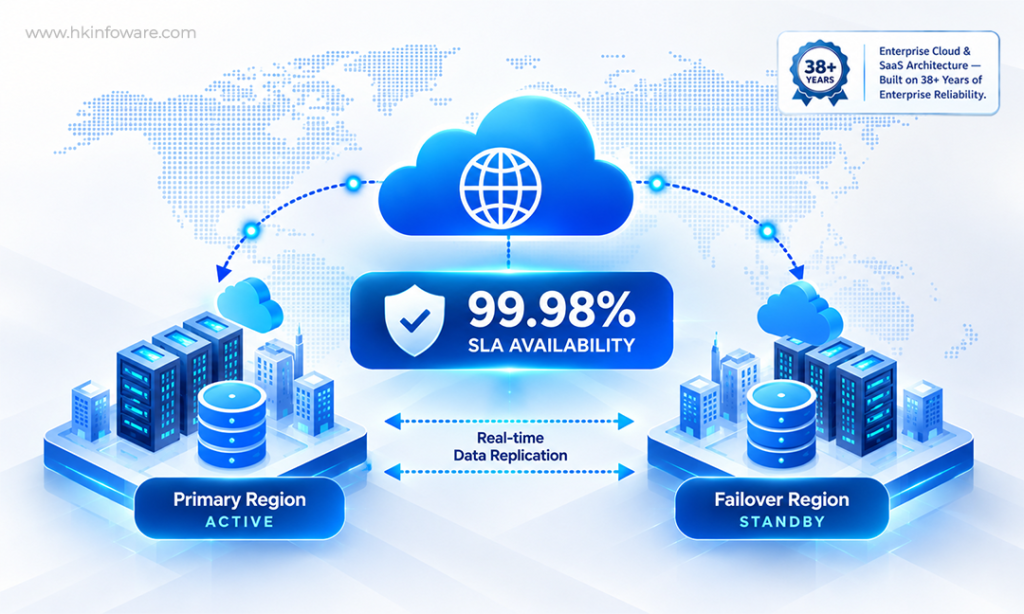
- Zero-Downtime Operations: Can upgrades occur seamlessly without disrupting daily user workflows?
When software vendors constantly chase development trends, they pass the risk down to the enterprise client. Every forced upgrade cycle introduces integration friction, breaks legacy workflows, and increases the surface area for software bugs. Durability reduces this risk to zero.
Balancing Innovation with Secure Architecture
Choosing durability does not mean stagnation. A resilient software philosophy does not reject innovation; it contextualizes it.
The strategy behind software architecture scalability is simple: Build an ironclad, stable core, and wrap it in agile, modern layers.
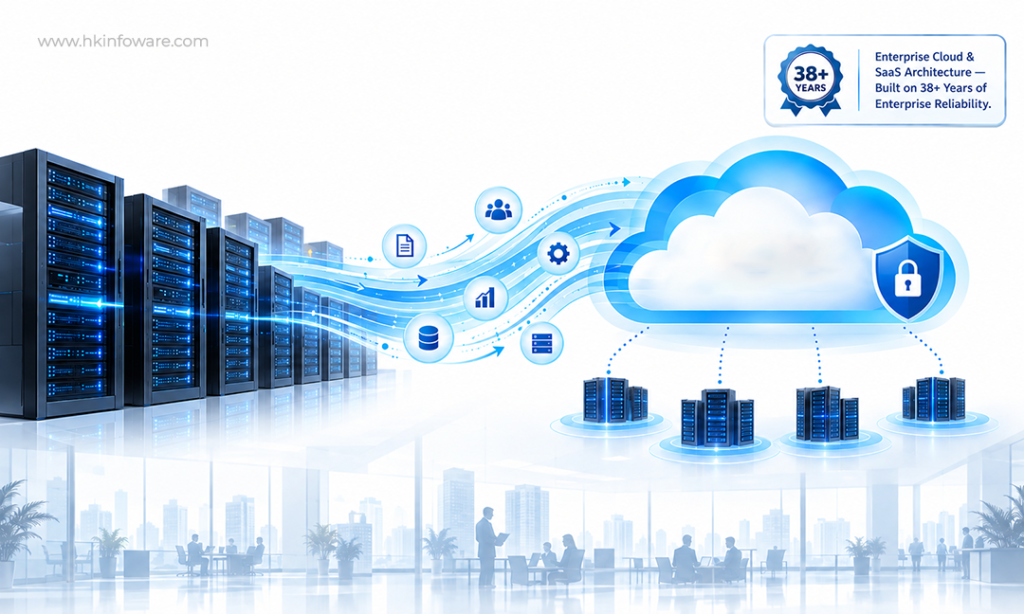
Consider implementing cloud native development pipelines, real-time live dashboards, or predictive analytical metrics – it does not require tearing up your foundational database. By maintaining a clear separation of concerns, you can execute successful legacy system modernization without losing the time-tested business logic that keeps your operations running safely.
Mature, thoroughly documented, and heavily stress-tested technologies may seem “boring” to trend-focused developers, but “boring” software is exactly what keeps multi-million dollar enterprise operations stable under pressure.
The Technology Evaluation Checklist for Executives: An Extended Auditing Framework
Before signing off on your next major capital software acquisition, or approving an internal development roadmap, put the proposed architecture through these four strict, non-negotiable diagnostic evaluations.
1. Foundation: Commercial Stewardship vs. Community Volatility
Is this technology backed by a massive, historically stable foundation, or a volatile open-source community prone to sudden pivots?
The Operational Risk
When software relies on a framework maintained entirely by hobbyists or venture-backed startups chasing an exit, your enterprise infrastructure is built on sand. If the core developers lose interest, run out of funding, or suddenly change their open-source licensing model (as seen in recent industry shifts by major database and infrastructure players), you are left holding a legacy liability.
Executive Auditing Criteria
- Licensing Longevity: Does the software use open-source licenses that protect you from sudden monetization walls, or is it bound to a single vendor’s commercial whims?
- The Enterprise Ecosystem: Are Fortune 500 companies actively using and financing this foundational stack? If a framework is not trusted to run a bank, an airline, or a government system, it should not run your enterprise.
- Talent Availability Pool: Is there a deep global pool of experienced developers for this technology, or are you creating a single-point-of-failure by hiring for a hyper-niche, trendy stack that will be hard to replace next year?
2. Compatibility: The Breaking-Change Velocity Audit
What is the breaking-change history of this framework over the past 36 months? Will it force an unexpected rewrite in the near future?
The Operational Risk
“Breaking changes” mean that when a software framework updates from version X to version Y, the code written for version X completely stops working. If a vendor’s underlying stack has a high velocity of breaking changes, your internal IT team will spend a massive portion of their annual budget simply keeping the lights on through forced upgrades, rather than launching features that drive revenue.
Executive Auditing Criteria
- The 36-Month Track Record: Review the framework’s release notes over the past three years. Did moving from minor versions require extensive code refactoring, or do they guarantee strict backward compatibility?
- Vendor Support Life Cycles: Does the technology offer Long-Term Support (LTS) versions that are guaranteed security patches for at least 5 to 10 years without requiring structural code updates?
- Integration Fragility: How many third-party dependencies are required to make the system work? Every additional library represents a disconnected breaking-change clock ticking inside your application.
3. Separation: The Independent Data Layer Mandate
Can our core database schema and business logic survive completely intact if the front-end user interface layer is swapped out tomorrow?
The Operational Risk
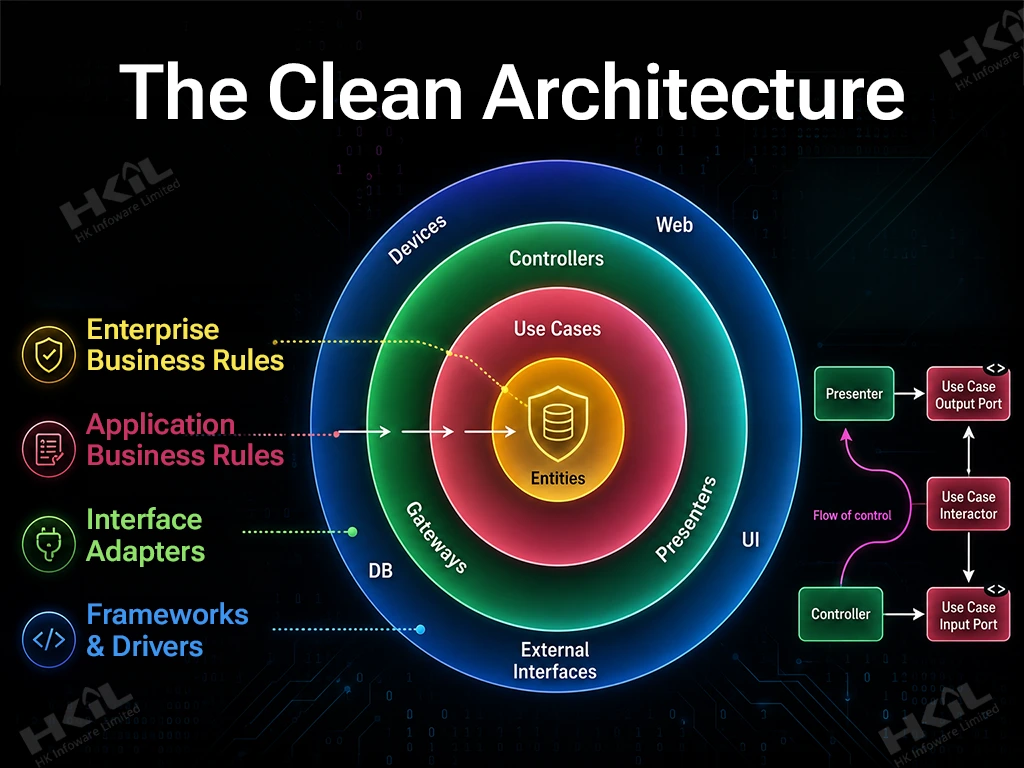
The biggest architectural flaw in modern apps is “tight coupling”—where the business logic (how you calculate your profits, manage user permissions, or track inventory) is tangled up with the user interface (the web pages or mobile apps). User interfaces age rapidly and need refreshes every few years. If your data layer is tightly coupled to the UI layer, a simple visual redesign turns into a high-risk, multi-million dollar backend data migration.
Executive Auditing Criteria
- Strict Model-View Architecture: Is there a hard, absolute separation between your database schema and the presentation layer?
- API-First Design: Does the application communicate with the database exclusively through a secure, standardized API gateway? If yes, you can completely discard and replace the front-end interface in the future without risking data corruption or losing a single historical record.
- Data Portability: If you decide to fire this vendor or change internal frameworks in five years, can you easily extract your raw relational SQL data tables cleanly, or is your data trapped inside a proprietary database structure?
4. Purpose: Business Metrics vs. Resume-Driven Development
Are we building this feature to solve a tangible business problem, or are we building it to satisfy developer boredom and chase industry hype?
The Operational Risk
Software development teams naturally want to work with the latest, most complex technologies to keep their personal resumes competitive. This leads directly to Resume-Driven Development (RDD), where simple business problems are met with wildly complicated enterprise solutions. Hence, building a complex network of microservices or integrating unproven machine-learning models for a straightforward data-entry ledger adds immense operational cost with zero business upside.
Executive Auditing Criteria
- The Clear ROI Link: What specific business metric does this architectural complexity improve? Will it directly lower customer churn, reduce server overhead costs by a verifiable percentage, or optimize user transaction speed?
- The “KISS” Test (Keep It Simple, Stupid): Could this exact same feature be built using existing, stable, mature database features without adding a new tool to our technology stack?
- Maintenance Overhead Calculation: Has the team factored in the long-term cost of monitoring, debugging, and hosting this new architectural element over the next 7 to 10 years, or are they only looking at the immediate implementation cost?
Software architecture, thus acts as a long-term financial roadmap, where failing to audit structural choices cedes control of corporate balance sheets to technical debt. Application of rigorous diagnostic filters are required to transform technology from an unpredictable cost center into a resilient, strategic asset designed for long-term durability.
Building for the Next Generation
Fast development cycles are highly effective for experimenting and learning. However, institutional scale demands deep architectural precision.
When digital infrastructure is built to last, it frees an organization from the cycle of technical debt and forced migrations. Stop chasing the shiny object of the month. Partner with architectures built on foundational SaaS engineering resilience, and invest in software that drives value today, tomorrow, and decades into the future.
Looking to audit your current digital ecosystem for long-term durability?
Contact the engineering team at HK Infoware Limited to learn how we design cloud-native, scalable enterprise saas solutions engineered for decades of resilient operation.