SaaS Product Development Company vs Traditional Software Development: Key Differences

In the rapidly evolving digital landscape, organizations are constantly faced with a critical architectural crossroads: Should they invest in traditional software development or partner with a modern SaaS Product Development Company?
For over 38 years, HK Infoware Limited has guided enterprises, educational institutions, and hospitality brands through these foundational structural shifts. Evolving from traditional on-premise systems to engineering cutting-edge cloud-native SaaS products, we understand that selecting the right development paradigm is not just a tech upgrade—it is the ultimate catalyst for long-term commercial growth.
Let us break down the fundamental architectural, operational, and financial differences between these two methodologies to help you determine the optimal blueprint for your enterprise.
1. Deployment and Infrastructure: Local Servers vs. The Cloud
The most striking divergence lies in where the software lives and how it is managed.
- Traditional Software Development: This model relies on on-premise deployments. The application is installed directly onto local servers and individual workstations. While it provides complete local control, it demands massive upfront investments in heavy hardware setups, local server maintenance, and a dedicated in-house IT team to manage the infrastructure.
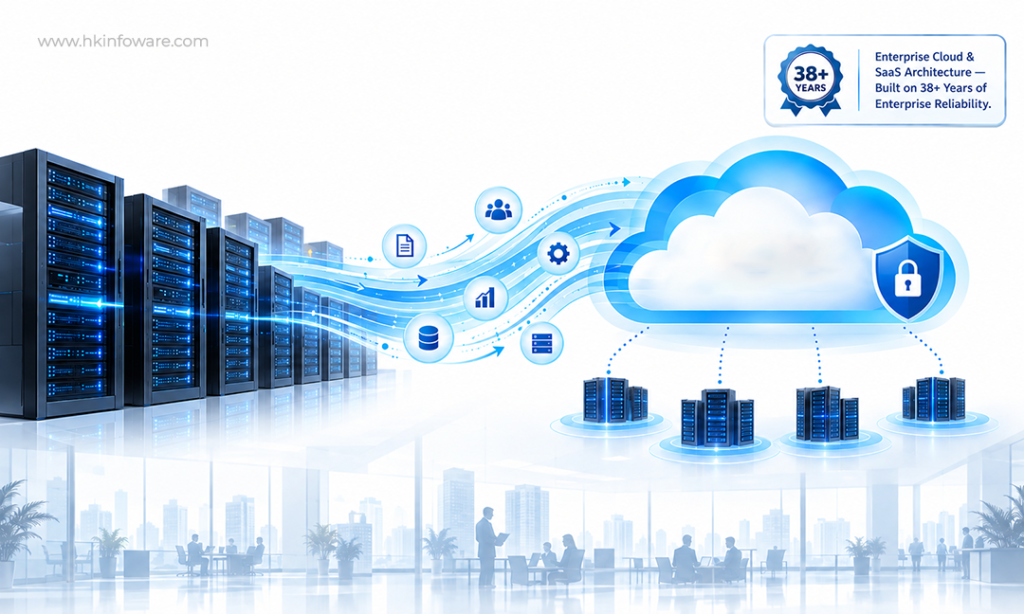
- SaaS Product Development: Engineered with a multi-tenant SaaS architecture, modern SaaS platforms operate entirely in secure cloud environments (such as Microsoft Azure). A single, unified infrastructure serves thousands of users globally while maintaining ironclad data isolation. This eliminates local hardware dependency entirely, offering remote accessibility from anywhere, anytime.
2. Financial Framework: Heavy Capital Expenditure vs. Predictable Subscriptions
How your business accounts for software spending can drastically impact cash flow and resource allocation.
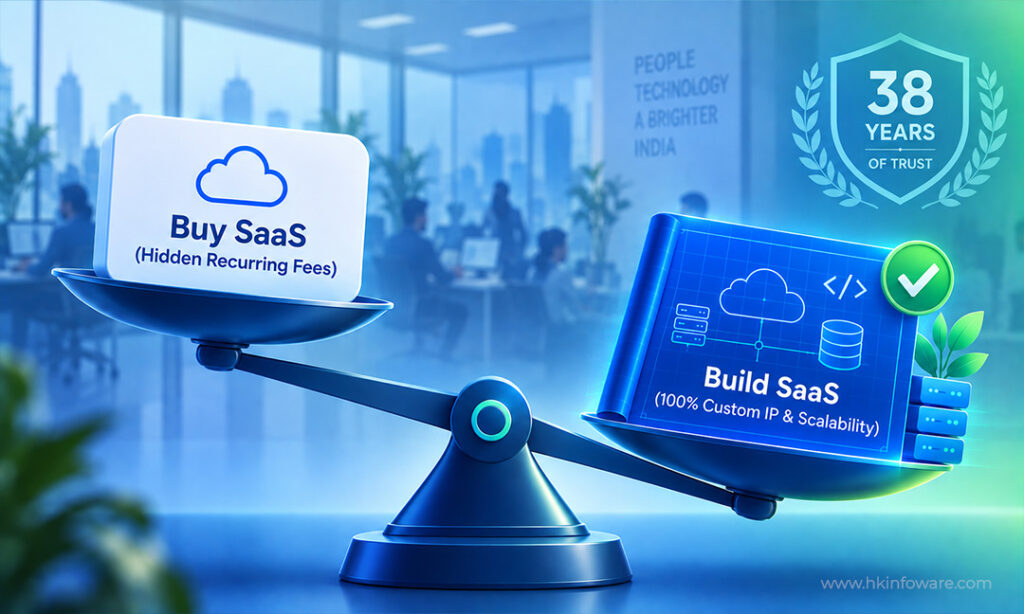
- Traditional Software Development: This framework operates on a Capital Expenditure (CapEx) model. Businesses must pay substantial upfront software licensing fees, alongside high initial costs for infrastructure setup. Furthermore, subsequent upgrades or major version releases often require entirely new purchasing agreements.
- SaaS Product Development: SaaS utilizes an Operational Expenditure (OpEx) structure powered by a highly predictable, subscription-based revenue model. Instead of bearing massive upfront risks, enterprises enjoy predictable monthly or annual costs, letting them scale their technology usage seamlessly alongside actual business growth.
3. Maintenance, Upgrades, and the Evolution Cycle
Software is never truly “finished.” It must continuously evolve to counter emerging security threats and meet shifting market demands.
- Traditional Software Development: Upgrading traditional software is a tedious, manual process. IT teams must deploy patches across individual local machines or servers manually. This often leads to fragmented versions within the same organization, severe downtime, and an accumulation of technical debt.
- SaaS Product Development: When you partner with an expert SaaS Product Development Company, upgrades happen seamlessly in the cloud. Feature enhancements, performance optimizations, and security patches are rolled out via automated workflow. Every user instantly logs into the latest, most secure version without a single second of operational disruption.
4. Scalability: Overcoming the Operational Bottleneck
As your business grows, can your software handle the expanding load without eroding profit margins?
- Traditional Software Development: Scaling up requires purchasing more physical servers, expanding local networks, and manually re-configuring database instances. This creates a literal brick wall for rapid growth, causing delayed decisions and missed market opportunities.
- SaaS Product Development: Built natively with microservices and cloud infrastructure, SaaS platforms scale automatically. Whether your platform needs to handle 100 users or 100,000 users simultaneously, the underlying architecture adapts on demand, offering frictionless scalability without infrastructure overhead.
5. Industry Focus: Real-World Applications
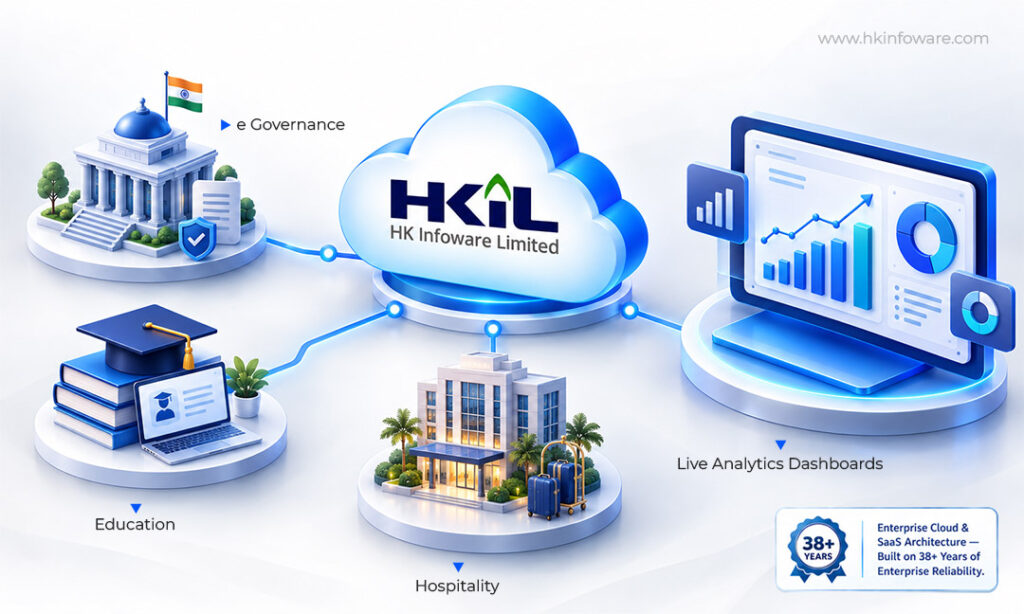
At HK Infoware Limited, we apply these robust SaaS product engineering principles to build domain-specific, high-performance platforms across specialized industries:
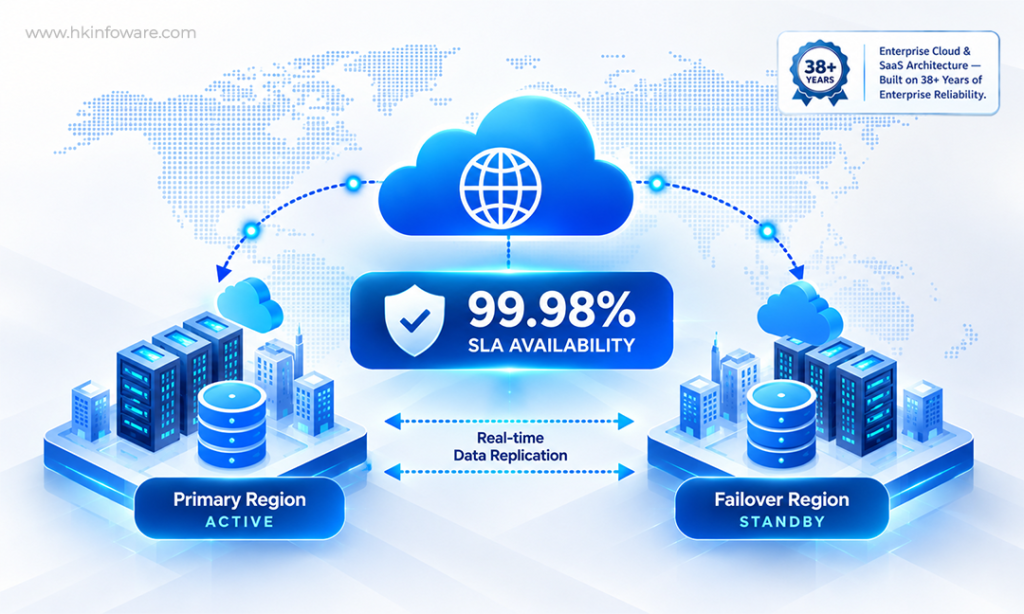
- Education Technology: Moving away from rigid, local databases, our cloud-enabled School ERP & Learning Platform (TulipDesk) centralizes academic, administrative, and admission workflows with 99.98% uptime.
- Hospitality SaaS: Our modern Hospitality SaaS Platform replaces manual tracking and fragile spreadsheets with centralized, multi-channel operation controls optimized for hotels and restaurants.
- Digital Governance: We engineer secure, role-based e-Governance solutions that centralize administrative operations and maximize public service delivery transparency.
Conclusion
Traditional software development still holds merit for highly isolated setups requiring total on-premise isolation. However, for forward-thinking organizations aiming to eliminate infrastructure management overhead, bypass capital-heavy setups, and achieve frictionless scalability, partnering with an agile SaaS Product Development Company is the undisputed choice. Investing in cloud-native software architecture ensures your business breaks free from operational bottlenecks and remains engineered for long-term growth.