Build vs. Buy for Enterprise SaaS: How Indian CTOs Calculate Total Cost of Ownership (TCO) in 2026
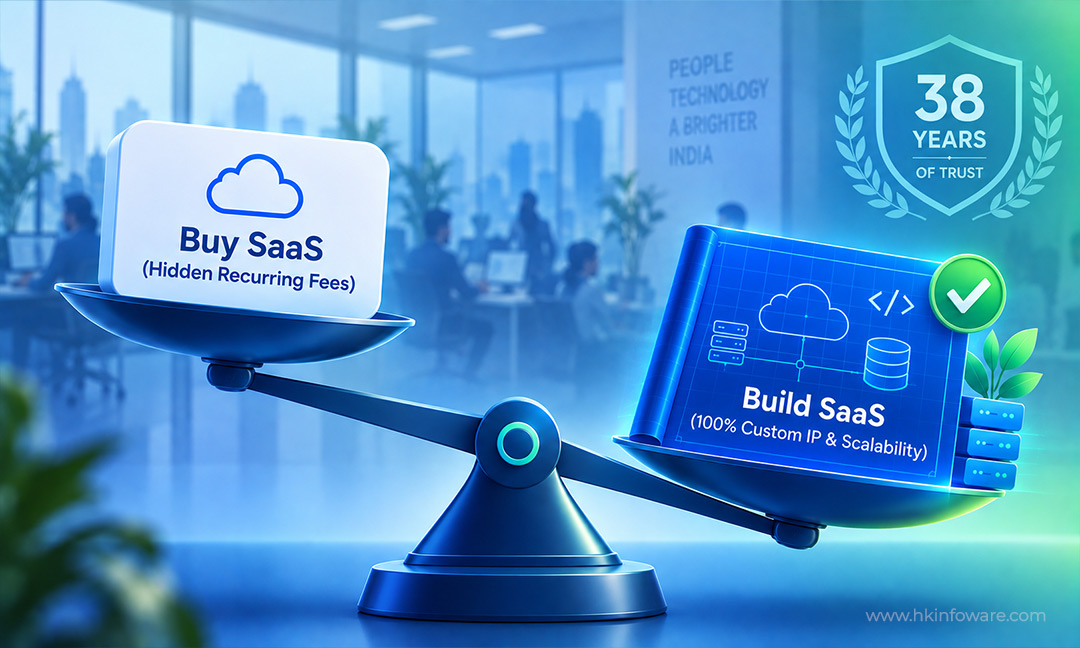
Technology leaders face a strategic dilemma as Indian enterprises drive digital transformation in 2026. Should you rely on custom software or buy an off-the-shelf SaaS solution? The true question is what will happen in the next three to five years when comparing a subscription tool with an enterprise software development company in India.
It requires looking past immediate price tags to analyze long-term financial, technical, and operational impacts. When calculating true Total Cost of Ownership (TCO), account for setup fees, maintenance, and future scalability.
1. Upfront Investments: Initial Capital vs. Dynamic Subscriptions
This is where most comparisons start, and where most of them stop too early.
The Build Approach: It requires significant upfront financial expenditures for infrastructure, security sign-offs, engineers, architecture, and UX research. Before you have shipped anything, there is a lot to put down.
The Buy Approach: Purchasing third-party software converts expenses into predictable Operational Expenditure (OpEx). It may seem more advantageous on paper. However, a “cheaper” alternative may eventually catch up to business pricing tiers, unrequested onboarding add-ons, and contract escalations over several years.
2. Hidden Cost Factors: Integrations and Technical Debt
The most critical cost variables rarely appear on initial proposals.
Custom Integration Overhead: It is nearly never easy to integrate a commercial SaaS solution into your current ERP or older systems. Deployment costs can increase by 150–200% just with custom connectors.
Ongoing Engineering & Maintenance: If you create it yourself, you are also responsible for patches, updates, and bug fixes. As a general industry guideline, you should budget between 15 and 20 percent of your initial build cost per year to maintain operations.
3. Strategic Advantage: Core Competency vs. Commodity
The decision ultimately hinges on whether the software drives proprietary value.
Build for Differentiation: Custom software is worth defending if it interacts with your main source of income, a workflow that is truly yours, or confidential data.
Buy for Standard Utility: Internal engineering teams can continue to concentrate on their core growth goals by using commercial SaaS for non-differentiating internal tools like regular payroll, basic CRM, or general messaging.
Summary Breakdown: Build vs. Buy TCO Matrix
| Dimension | Custom Enterprise Build | Off-the-Shelf SaaS |
|---|---|---|
| Financial Framework | CapEx Heavy Initially | Predictable Monthly/Annual OpEx |
| Time-to-Value | 6–12 Months | 2–6 Weeks |
| Customization Depth | Unlimited / Tailored | Constrained by Vendor Roadmap |
| Vendor Lock-in Risk | Low (Full Code Ownership) | High |
| Maintenance Burden | Managed by In-House / Vendor Partner | Managed by SaaS Provider |
4. Integration, Scalability, and Eliminating Data Silos
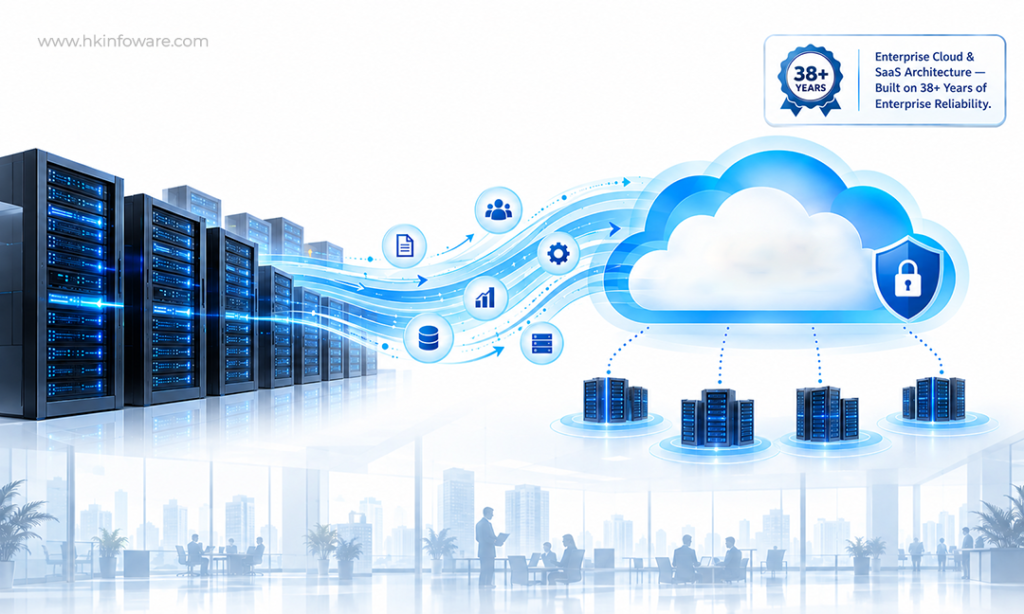
One significant hidden business expenditure is system integration friction. Manual spreadsheet workarounds and security flaws result from canned software’s frequent inability to integrate seamlessly with legacy infrastructures. Organizations may create cloud-native SaaS systems with elastic microservices architectures by utilizing offshore software development in India. Modern custom architectures allow auto-scaling alongside data volume growth while unifying fragmented HR, finance, and operational databases into a single source of truth.
Conclusion:
Comparing vendor quotations to engineering wages is only one aspect of calculating Total Cost of Ownership (TCO) ; other factors include business velocity, risk distribution, and sustainable distinctiveness.
With 38 years of expertise in custom engineering, HK Infoware Limited guides businesses through this strategic decision to create digital assets that are durable, scalable, and economical. Forward-thinking CTOs may maximize capital expenditures, keep complete control over their technical infrastructure, and create high-impact platforms designed for ongoing expansion by working with a reputable enterprise software development company in India.