Migrating Enterprise Workflows to Microsoft Azure: How Indian Organizations Eliminate Downtime, Ensure High Availability & Reduce Cloud Costs
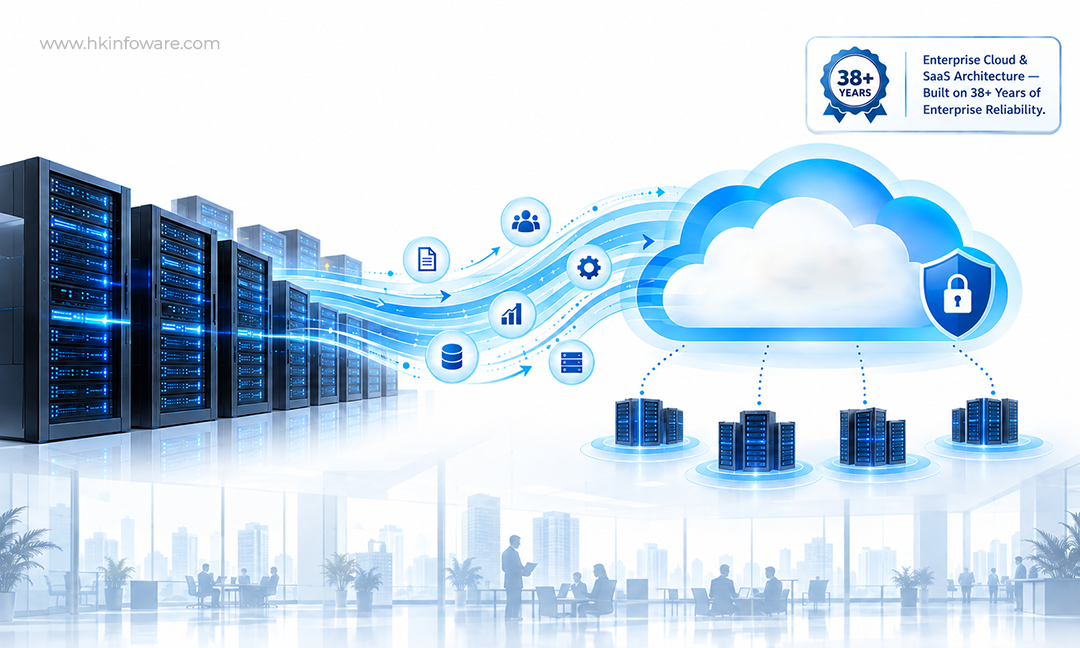
There has never been a greater need for dependable, secure, and reasonably priced cloud-based enterprise software in India. All industries, including government projects, large-scale educational institutions, and hospitality organizations, are rapidly digitizing. Security threats during peak traffic strain operations, cause unplanned downtime, and lead to high server maintenance costs. For Indian businesses, moving enterprise workflows to Microsoft Azure provides a revolutionary solution to achieve high availability, smooth business continuity, and significant cost savings.
The Indian Enterprise Landscape’s Transition to Microsoft Azure
Indian organisations are replacing on-premises servers with flexible cloud architectures. Infrastructure that automatically scales dynamically without crashing or creating lag is necessary for high transaction volumes. Organizations may obtain enterprise-grade security controls, high-speed connectivity, and localized data residency by utilizing Azure’s strong infrastructure. By moving mission-critical operations to SaaS product engineering frameworks on Azure, businesses can concentrate on growth and continuous delivery.
3 Core Pillars of Azure Enterprise Migration
1. Removing Unexpected Downtime
Direct revenue loss and brand risk result from system breakdowns during high-stakes operating hours, such as peak admission seasons for educational platforms or high-volume booking times for hospitality networks. Azure avoids unplanned outages.
Predictive Diagnostics & Monitoring: Anomalies are found by real-time metrics before they cause serious system problems.
Continuous Integration and Continuous Deployment (CI/CD) pipelines: They enable engineering teams to release upgrades without interfering with operations.
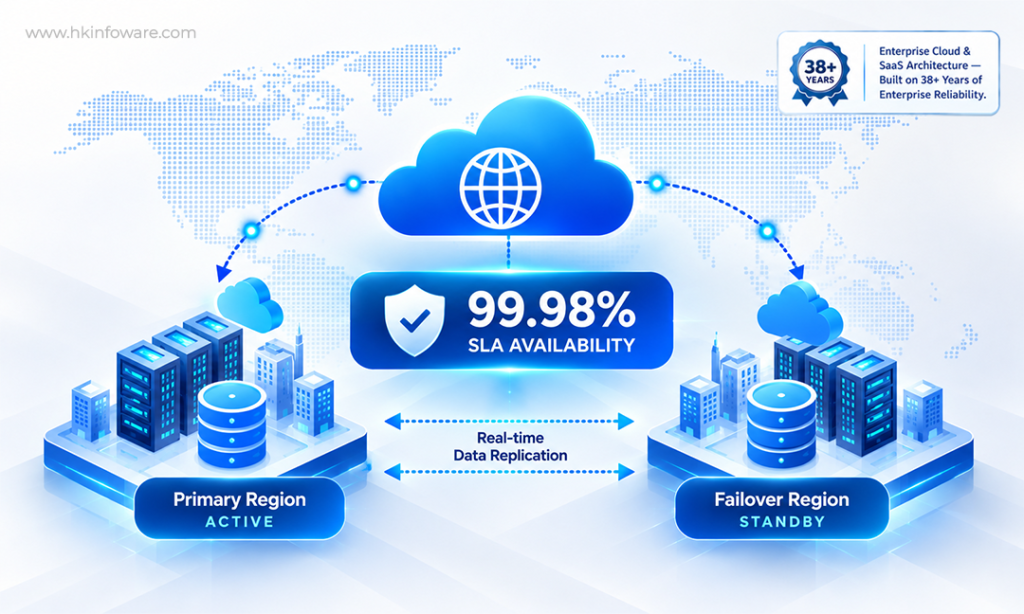
Automated Failover Mechanisms: Even in the event of local hardware problems, system services are guaranteed to continue thanks to automated traffic rerouting.
2. Ensuring High Availability & Fault Tolerance
For organizations managing School ERP & Learning Platforms or extensive e-governance systems, system uptime is vital. Azure ensures resilience.
Availability Zones: Isolating workloads across physical locations within an Azure region protects applications from localized data center disruptions.
Global Load Balancing: Intelligent traffic routing delivers low-latency user experiences across multi-regional deployments.
Comprehensive Disaster Recovery (DR): Near-zero Recovery Time Objectives (RTO) and Recovery Point Objectives (RPO) keep core enterprise workflows active.
3. Strategies for Optimizing Smart Cloud Costs
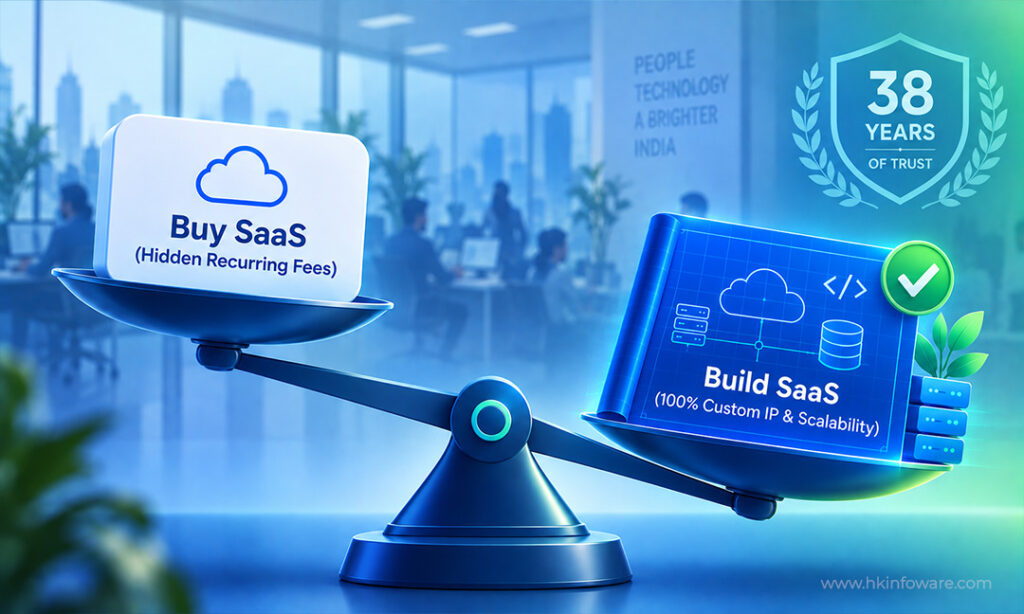
A major fear during cloud adoption is uncertain recurring bills. By implementing contemporary cloud-native development concepts, migrating to Azure allows businesses to efficiently reduce operational expenses.
Auto-Scaling Resources: To reduce idle costs, systems automatically scale down during off-peak hours and increase compute capacity during periods of high demand.
Azure Hybrid Benefit & Reserved Instances: Long-term infrastructure costs are greatly reduced by committing to predictable workloads and reusing current business software licenses.
Rightsizing Workloads: Continuous analysis of CPU and memory utilization prevents over-provisioning.
Changing Important Sectors: Hospitality, Governance, and Education
Domain-specific operational demands are directly addressed by custom enterprise migration strategies:
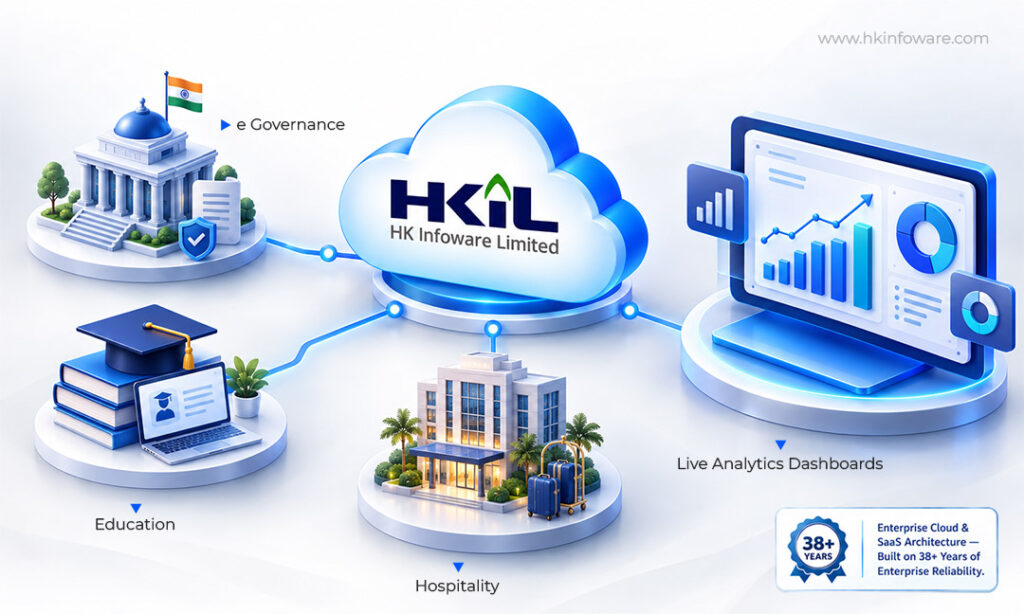
Educational Institutions: Implementing a cloud-enabled School Automation System allows for uninterrupted service during admission intake, online exams, and fee submission times.
Hospitality Operations: A centralized Hospitality administration System enables real-time booking processing, multi-property administration, and seamless guest-facing operations.
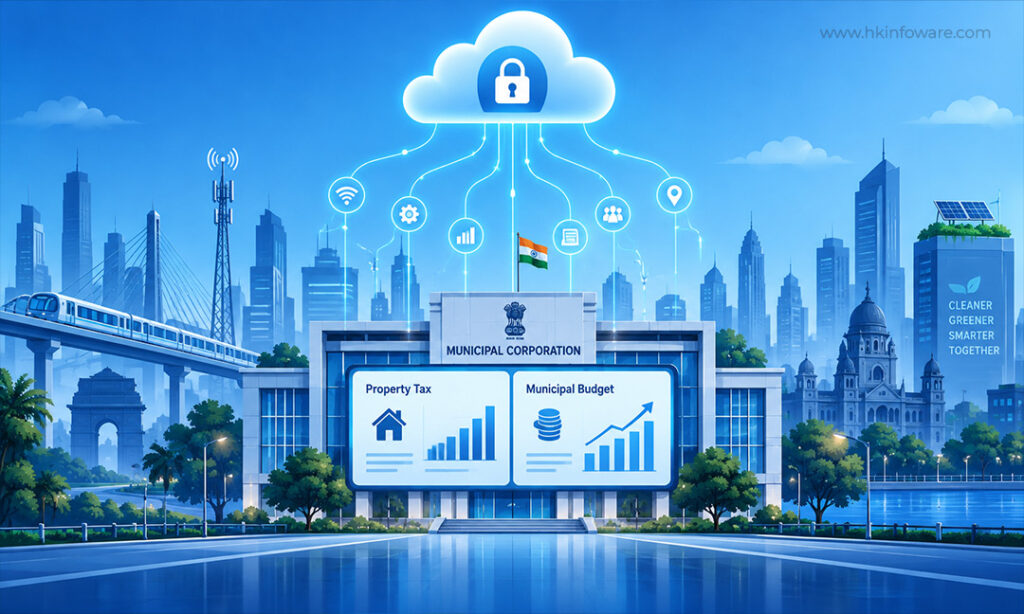
E-Government Projects: To effectively serve citizens, secure E-Governance Solutions require high-level encryption, role-based access control, and complete uptime.
Using HK Infoware to Engineer Your Smooth Azure Migration
Deep architectural design, knowledge of legacy data migration, and post-deployment support are necessary for a successful cloud migration. A smooth transition is ensured by working with a seasoned tech innovator like HK Infoware Limited, which has over 38 years of experience in enterprise software engineering. HK Infoware assists Indian enterprises in creating dependable, secure, and future-ready digital platforms. From the first infrastructure evaluation and architectural design to execution and lifecycle management, everything is in expert hands.
Conclusion
Instead of merely upgrading IT, moving organizational workflows to Microsoft Azure is a strategic decision that supports security, agility, and long-term business performance. Indian companies can successfully navigate their digital transformation journey by eliminating costly downtime. Technology partners like HK Infoware, a skilled cloud-based enterprise software company in India, can ensure continuous high availability with optimized cloud expenses.